
Zheng Yan
University of Missouri-Columbia.
Seminar Information
Over the past decade, tissue-like soft bioelectronics have made remarkable strides, enabling new frontiers in human-centered precision healthcare. When coupled with artificial intelligence (AI) and big data analytics, these systems are transforming how health information is collected, interpreted, and utilized. Yet, critical challenges remain, such as limited long-term biocompatibility, motion- induced signal artifacts, and the lack of customized designs tailored to specific clinical needs, which hinder the translational potential. The overarching mission of our Soft Materials and Bio-Electronics
(SMBE) Laboratory is to advance human-centered precision healthcare through fundamental innovations in soft bioelectronics by (i) seamlessly bridging the bioelectronics-biology interface, (ii) developing scalable bio-manufacturing strategies, and (iii) creating customized, patient-specific healthcare systems.
In this talk, I will present two representative examples that highlight our recent progress. First, I will introduce multifunctional porous soft materials that enable next-generation bioelectronic systems with long-term biocompatibility and reduced motion artifacts. These platforms support continuous, broad-spectrum physiological and biochemical sensing—from electrophysiological signals to biomarkers such as glucose, uric acid, caffeine, alcohol, ammonia, and β-hydroxybutyrate—enabling applications in nutrition monitoring, health management, and energy metabolism. Second, I will present AI-enabled, starfish-inspired wearable cardiac systems capable of high-fidelity, synchronized acquisition of electrocardiogram (ECG), seismocardiogram (SCG), and gyrocardiogram (GCG) signals, even during dynamic conditions. By integrating multimodal sensing with machine learning, these systems effectively suppress motion artifacts and enable robust correlation of signal patterns with cardiac conditions, including atrial fibrillation, myocardial infarction, and heart failure.
Together, these advances demonstrate how innovations across materials, device engineering, and data
analytics can converge to enable intelligent, adaptive, and patient-centered soft bioelectronic
systems—paving the way toward predictive, personalized, and accessible precision healthcare.
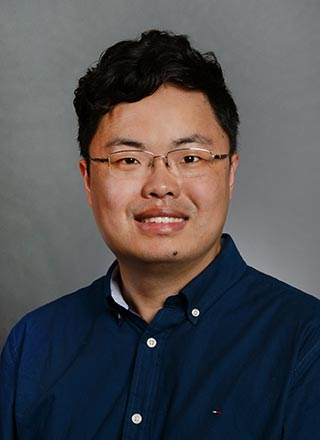
Dr. Zheng Yan is an Associate Professor in the Department of Chemical and Biomedical Engineering and the Cramer W. LaPierre Professor of Engineering at the University of Missouri-Columbia. He received his B.S. from Xi’an Jiao Tong University, M.S. from Tsinghua University, and Ph.D. from Rice University, followed by postdoctoral training at the University of Illinois at Urbana-Champaign. Dr. Yan joined the University of Missouri as an Assistant Professor in 2017 and was promoted to Associate Professor with tenure in 2023. He leads the Soft Materials and Bio-Electronics (SMBE) Lab, where his research focuses on advancing tissue-like soft bioelectronics at the intersection of biology, materials science, mechanics, electronics, and artificial intelligence. To date, Dr. Yan has published more than 100 research articles and secured over $7 million in federal research funding as Principal Investigator from the NIH and NSF. He has received numerous honors and recognitions, such as the NSF CAREER Award, the Materials Today Rising Star Award, the University of Missouri Chancellor’s Outstanding Research & Creative Activity Award, and the University of Missouri System President’s Award for Early Career Excellence.